



This article may include affiliate links. We may earn a small commission if you shop through them.
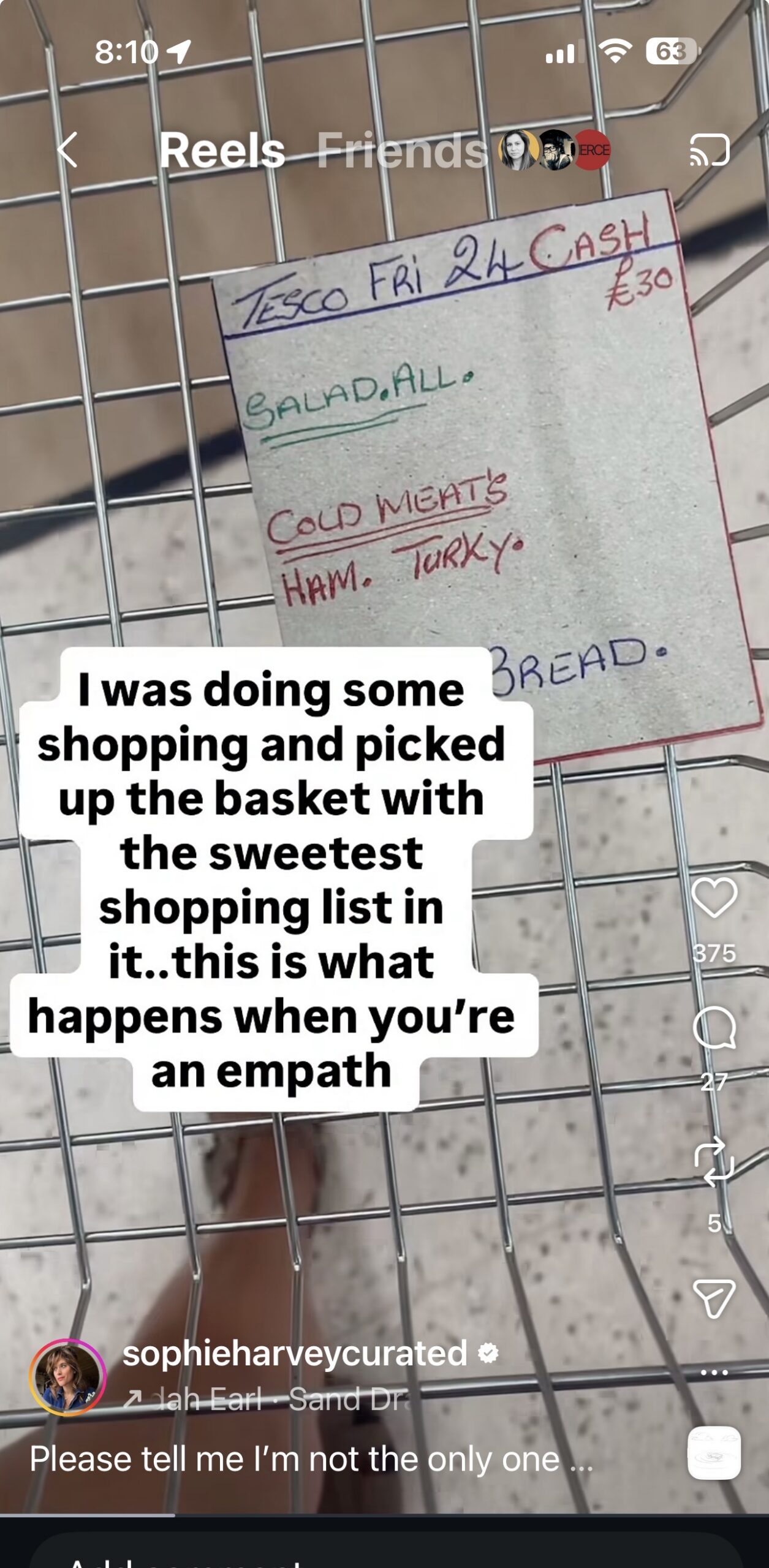
There’s a video going around from creator @sophieharveycurated that’s making everybody feel like they’re chopping onions.
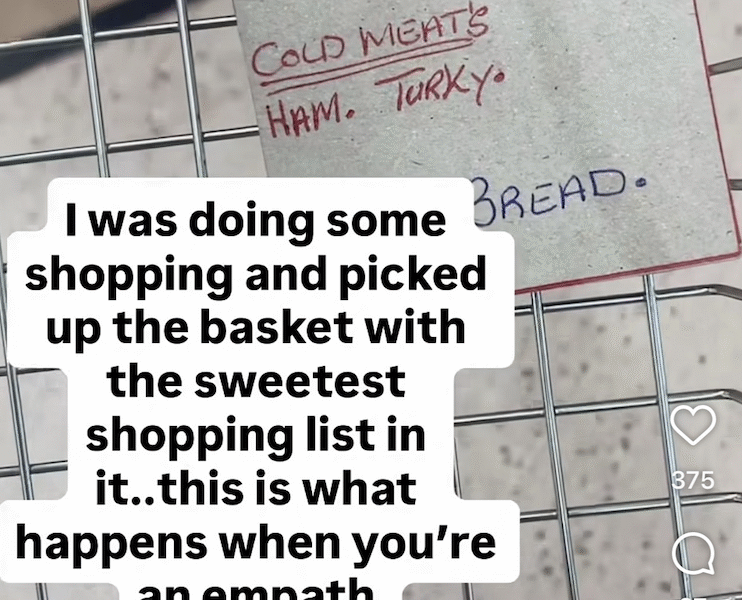
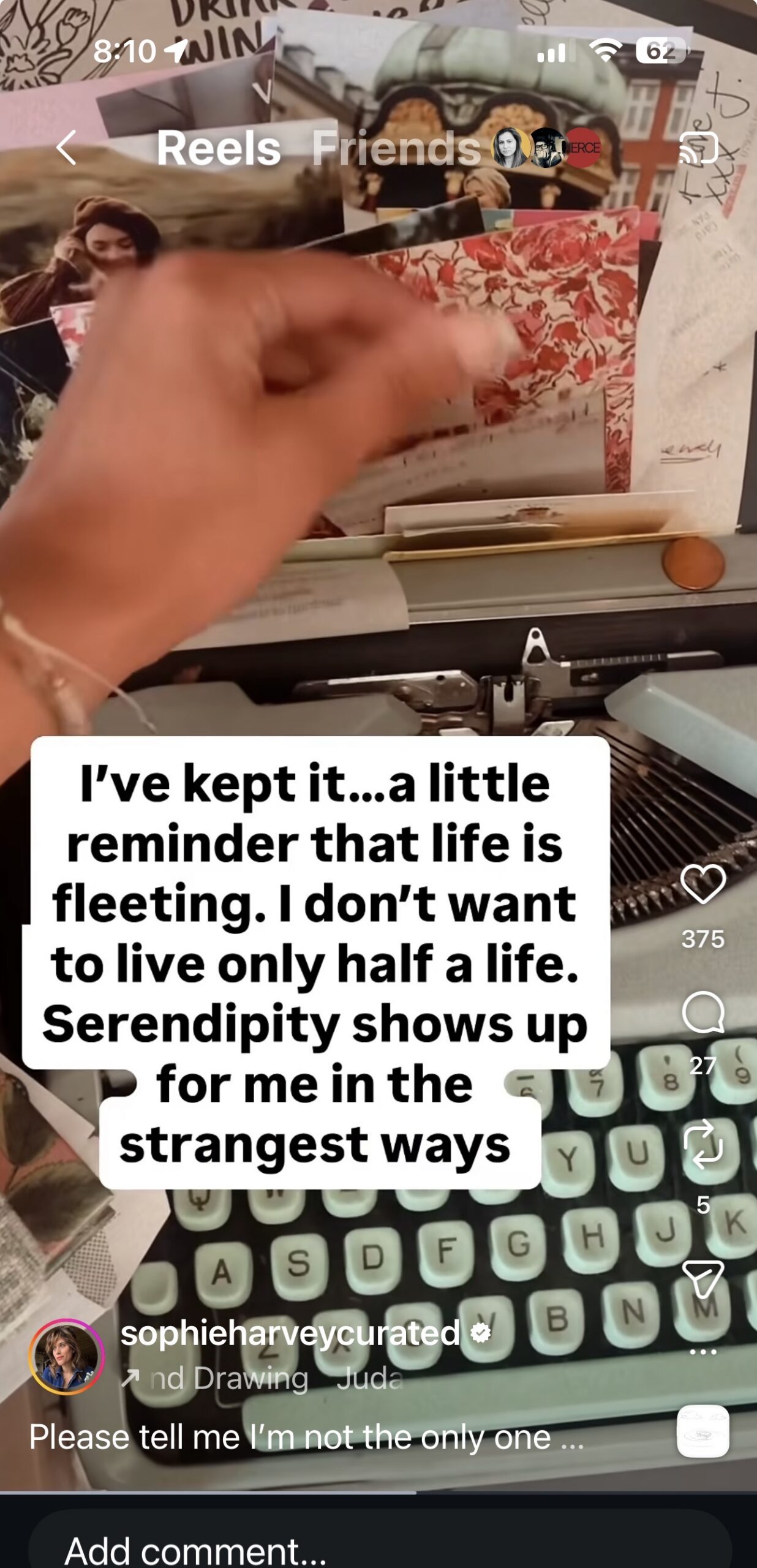
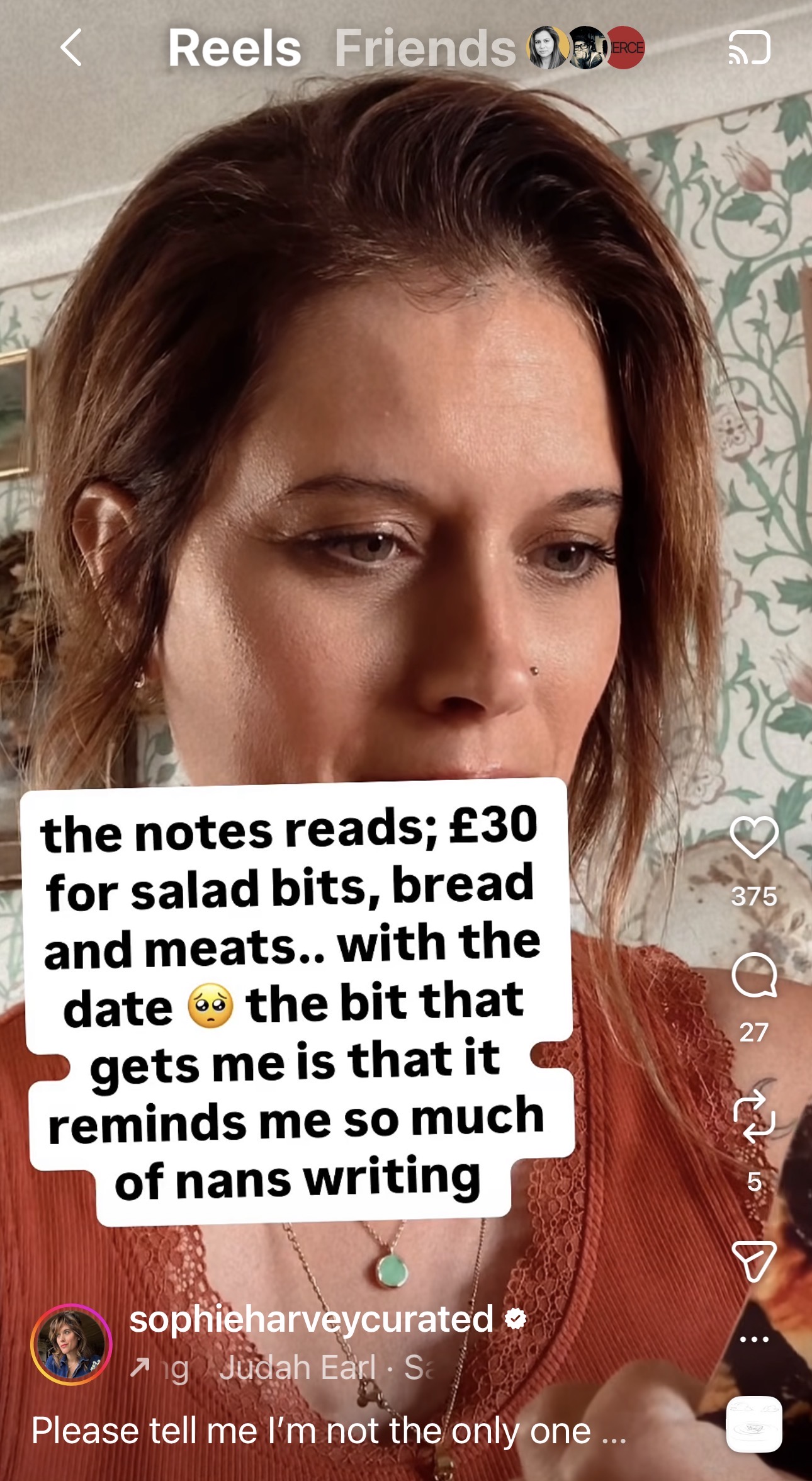
Sophie (a creator from the UK) found an abandoned shopping basket at the UK market Tesco with someone else’s list still tucked inside — cash total, a few items, handwriting that immediately reminded her of her own grandmother’s. So she kept it and added it to her little scrapbook collection.
She writes, “please tell me I’m not the only one” and continues with life is fleeting, I don’t want to live half a life, serendipity shows up in the strangest places.
When you see the handwritten note, you’ll understand exactly why this gave her the feels. The handwriting also reminded us of our abuelitas, in Latin America (Chrsitina’s was a first gen in San Francisco).
So why does this specific handwriting always look the same? The all-caps grocery lists. The underlines under “BREAD”. The way the numbers lean a little to the left. You know this handwriting. It’s the same handwriting our abuelas had. The same handwriting that you mind randomly on her old receta cards in a kitchen drawer, on the back of a photograph, in a birthday card that still smells vaguely but wonderfully like moth balls (and reminds you of your grandparent’s old house or rancho back in the motherland).
View this post on Instagram
There’s a real reason for that, and it’s kind of a lovely one. That generation of women were taught penmanship as a discipline and a good skill to have. They all had the same looping capitals, the same careful pressure, drilled into every classroom on both sides of every ocean. It’s not a coincidence that a nan’s handwriting in England looks like an abuela’s handwriting in La Serena or Oaxaca (where both our grandmas are from). It’s the same hand, more or less, taught the same way, for the same reason: because someone believed it mattered enough to get right.
The history of your abuela’s handwriting
In the U.S. and much of the English-speaking world, the dominant system was the Palmer Method, developed by Austin Norman Palmer in the late 1800s. Textbooks and manuals based on the Palmer Method were standard in classrooms, taught from elementary grades through high school, and the method’s influence extended well beyond the U.S., shaping penmanship instruction in other countries too. In 1904, New York City’s school district saw Palmer demonstrating the method at the St. Louis World’s Fair and adopted it for their students — and from there it spread through decades of American, and eventually international, classrooms
Students were taught to write with the whole arm rather than just the fingers — a technique that could be sustained for hours without fatigue, which mattered in a world before typewriters and computers were common. That’s part of why the letterforms carry such a consistent rhythm and slant across so many different people’s handwriting
In Latin America, similar standardized cursive systems were taught directly from national education ministries. In Cuba, for example, handwriting workbooks published by the Ministry of Education were explicitly based on the Palmer Method, with students taught fully-joined, sloped cursive starting in the first grade. Brazil developed its own vertical cursive standard, Caligrafia Vertical, first published in 1909, which sold roughly 110 million copies and was constantly reissued until 1989 — meaning generations of Brazilian schoolchildren, including plenty of abuelas and bisabuelas, learned to write from the literal same textbook.
When it went away
The Common Core State Standards, introduced in 2010, didn’t include cursive handwriting instruction, and by 2011, 41 U.S. states had adopted Common Core, effectively removing the requirement from their curricula. That’s the real fault line — an entire era of children stopped being taught this specific, standardized hand, almost all at once. Which is exactly why it now reads as belonging to one particular generation.
Which is maybe why finding it in a stranger’s shopping basket hits so hard. It’s not really about the salad and the cold meats and the £30 cash. It’s that the handwriting itself is a kind of inheritance — proof that someone, somewhere, is still writing the way our own abuelas wrote, and that if you’re lucky, a piece of paper can still catch you off guard on a random Tuesday and hand you back a person you miss.
Anyway. We’re fine. We are over here just chopping onions right now, remembering our grandmas.
Screenshot
You Might Also Enjoy
- I Asked a Pediatrician If My Family’s Eating Habits Were Ruining My Kids’ Health — Here’s What He Said
- Blue Mind Living: How the Ocean Has Shaped Our Family’s Rituals & Calm
- Netflix’s Little House on the Prairie Reboot Is the Family Show We’ve Been Missing
- The Cozy Bedroom Aesthetic Is Everywhere Right Now — Here’s How to Actually Live In It
- How to Style a Garden-Inspired Home: Kravet, Serena & Lily & Puebla Collection