



This article may include affiliate links. We may earn a small commission if you shop through them.
Over at Senora Era we have started organizing cookbooks based on cultures and homelands, making it easier for all of you to grab recipes from your countries. You’ll find it here (tell us what you think!). As we developed the section, we came across a fascinating story we had found as we wrote our book, Radical Senora Era. It’s about a señora who avenged the death of her grandfather by writing a now legendary cookbook.
Thanks to TikTok, we came across Encarnación Pinedo, a señora from one of the original Californio families who were in Mexican territory at the time of the Yankee invasion. Another one of our TikTok videos had gone viral, and an amiga in the comments suggested that we should pick up a book she had discovered, consisting of California women’s recipes.

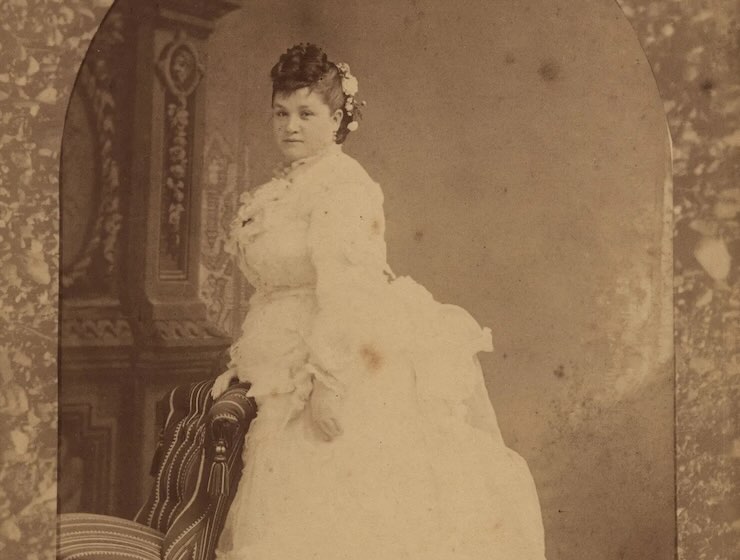
Encarnacion was an “it girl” before the term was invented. She was from an elite Mexican family who lived in what is present-day Santa Clara County, in California (on Tamien Nation land). She had a very nice life until her family’s lands were taken by Yankee invaders, who also murdered her grandfather and uncle.
She later became a cookbook author, and her book, El cocinero español [The Spanish kitchen], published in 1898 (which you can find for free here), has become a cult classic because it was the first cookbook in Spanish to feature Mexican, Spanish, indigenous, and European recipes.
She included recipes for jellies and jams, and recipes like chiles rellenos, chilaquiles con camarones secos, salsa bechamel con setas para ostras, tamales de harina de maíz blanco, carne de ternera seca en tasajos and, of course, albondiguillas de merluza.
I (Ann) completely fell in love with her cookbook because it seems to be the glue by which all of our country’s cultures are tied together: When I read it, I saw Mexican cuisine, Peruvian, Salvi, Chilean, Colombian, etc. No matter where you’re from you’ll feel a tiny bit of familiarity.
Encarnacion is also fascinating because she was kinda spicy. After the death of her family, she made it known how she felt about the people who had taken her family’s lives and lands by saying, “There is not a single Englishman who can cook, as their foods and style of seasoning are the most insipid and tasteless that one can imagine.” (Yikes!)

Here is her story:
Encarnación Pinedo was born in Santa Clara in 1848, right before the Gold Rush that came to her region. Her father had built the family home four years earlier, just outside the Mission walls — adobe, orchards, the smell of woodsmoke and stewing beef drifting over land her mother’s family, the Berreyesas, had held for generations. The Pinedos, Berreyesas, and Peraltas were the “mayors” of the valley. Rancho land as far as a horse could ride in a day.
She never got to live in that world. It ended two years before she was born, and it ended in brutality.
The Treaty of Guadalupe Hidalgo (1848) ended the Mexican-American War: Mexico ceded roughly half its territory — California included — and about 100,000 Mexicans became Americans overnight, whether or not they wanted it. The treaty promised they’d keep their lands, but then Congress gutted that protection, forcing Californio families to prove title to their own ranchos in American courts, in English, through years of ruinous litigation. Most, including families like the Berreyesas, lost nearly everything — legally.
It only became worse.
In 1846, during the American invasion, her grandfather José de los Reyes Berreyesa was shot dead by Frémont’s men after coming ashore near San Rafael, unarmed (Fremont was a U.S. Army officer who led the battle to take California). In the years that followed, the family lost nearly everything else: the land swallowed by Yankee squatters (although, her familiy had also been squatters in Indigenous land), lawyers, and a new legal system conducted in English – a language they did not know. Encarnación grew up an heiress of ghosts – the kitchen of a world that officially no longer existed.
So she did the most señora thing imaginable: she wrote it all down.
In 1898, at fifty, she published El cocinero español — the first cookbook written by a Hispanic woman in the United States. Hundreds of recipes in Spanish, at a time when Spanish speakers in California were being pushed out of public life entirely. Chiles rellenos. Chilaquiles. Tamales. Fifteen different salsas, because one was never going to be enough. She dedicated it to her nieces, the daughters of her sister who had married outside their culture – girls growing up with American names, whom she was determined would still know how their bisabuela’s kitchen smelled.
And she settled her family’s account in the most elegant way available to a woman of her era: on the page.
She was right in more ways than she knew. In 1991, the food critic Ruth Reichl observed that much of what we now celebrate as California cuisine was being practiced by Encarnación Pinedo a hundred years earlier. The kitchens got the credit eventually. She just wasn’t in the room — which, if you’ve spent any time in this community, is a story you already know.
Her cookbook was a rescue mission — one woman deciding that if they could take the land, the language, and the men, they would not take the food.
She died at the age of 53, and never married.


Tonight, light a candle, put on your grandmother’s apron, and try out one of Encarnation’s recipes to honor her life.

The famous recipes to find
- Chiles rellenos
- Chilaquiles — including chilaquiles con camarones secos (with dried shrimp)
- Enchiladas
- Tamales de harina de maíz blanco (white cornmeal tamales)
- Salsas — fifteen different versions, which might be the single best detail about her
Meats & mains
- Albondiguillas de merluza (little hake meatballs)
- Carne de ternera seca en tasajos (dried beef in strips)
- Picadillo
- Asados and adobos
- Chorizo dishes
The European crossover (the Basque and Spanish side of her table)
- Salsa bechamel con setas para ostras (béchamel with mushrooms for oysters)
- Empanadas
- Stews and casseroles in the Spanish style
Sweets & pantry
- Jellies and jams
- Pudines (puddings)
- Pastries and doughs