




This article may include affiliate links. We may earn a small commission if you shop through them.
Sadie Gardere on Reinvention, Raising Emotionally Connected Kids, and Finally Being Seen
The clinician, Hoffman Institute teacher, and children’s book author on motherhood, emotional presence, and the courage to be seen.
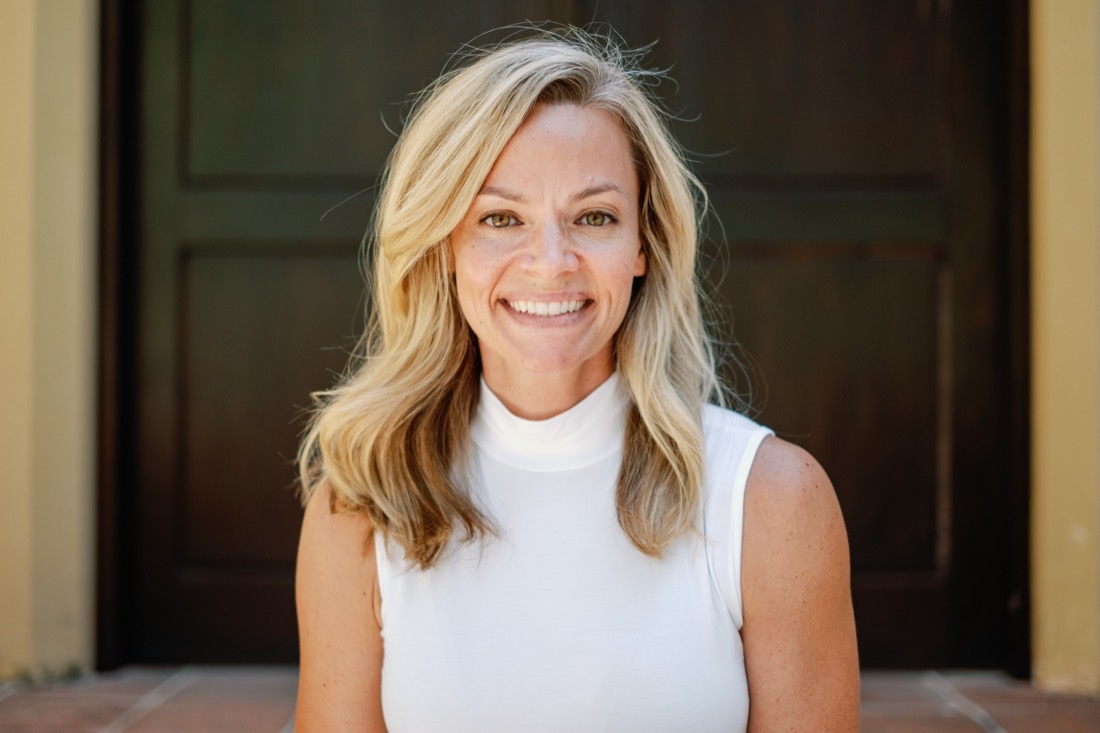
Sadie Gardere
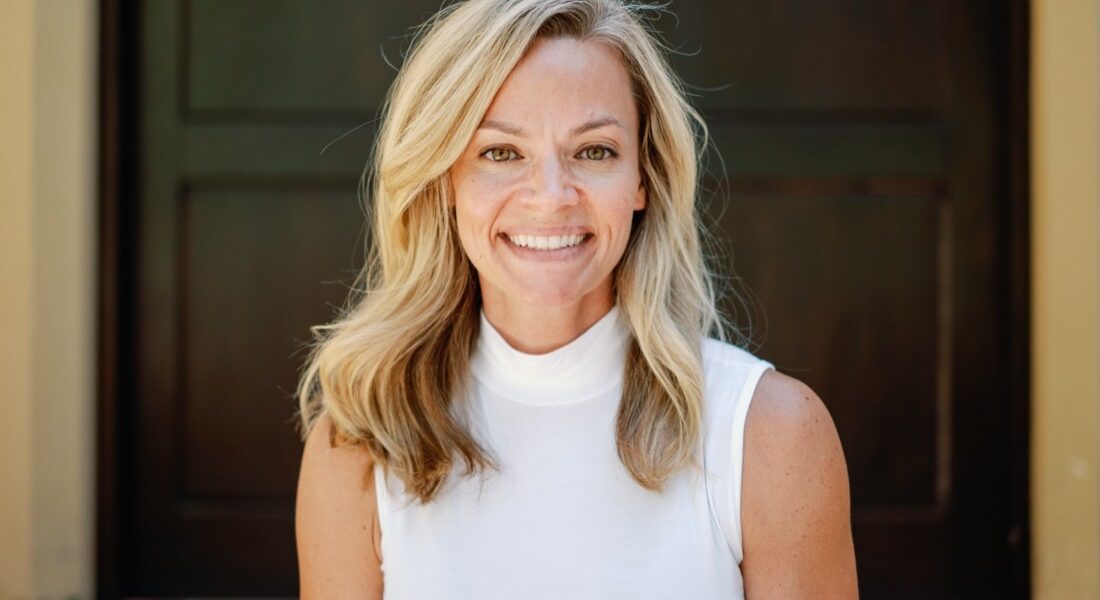
Soulful scientist, Stanford clinician, Hoffman teacher, and author of When the Wind Changes, who teaches people how to be emotionally present, with themselves first, and then with the people they love most.
On a night shift at UCSF Children’s Hospital, Sadie Gardere sat down on a hallway floor beside a mother whose three-year-old had just been diagnosed with leukemia.
For years, Sadie Gardere knew how to show up for everyone else. As a pediatric oncology nurse at UCSF, she sat beside families facing unimaginable moments, offering something no medical intervention could replace: the feeling of not being alone. But when her own son survived a life-threatening accident, Sadie found herself confronting a question she had spent years helping others navigate: What happens when you’re the one who needs care?
That experience changed everything. Now a clinician on Stanford University’s medical staff, a teacher and podcast host at the Hoffman Institute, and a children’s book author, Sadie has built her next chapter around a powerful belief: emotional presence isn’t something we’re simply born with. It’s something we can learn.
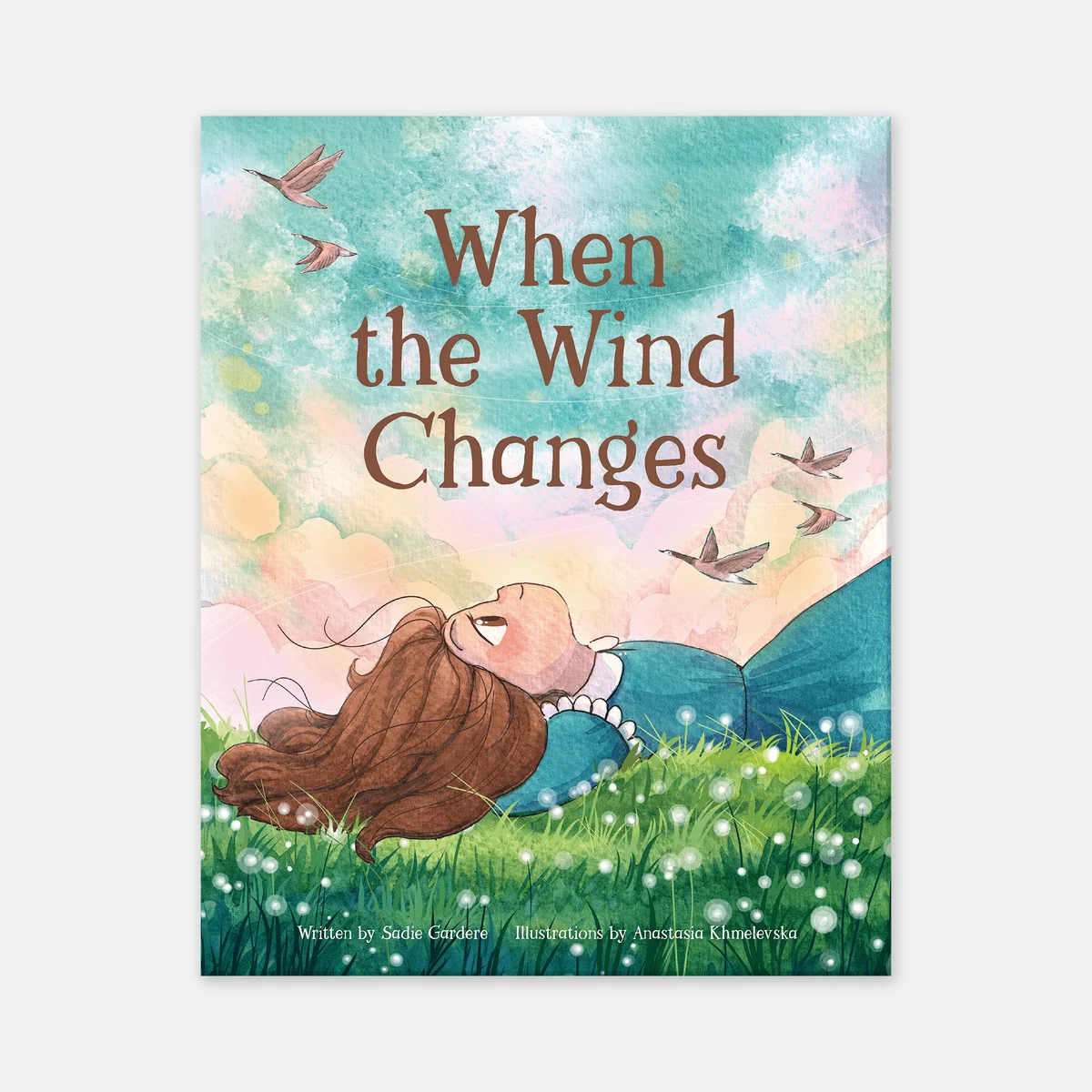
Her debut picture book, When the Wind Changes, arriving February 2027, brings that philosophy to parents and children through a story about change, resilience, and big feelings. For Sadie, it’s part of a much bigger ambition: transforming intergenerational trauma into intergenerational love.
In this Señora Session, Sadie opens up about motherhood, the courage to reinvent yourself, why she’s finally ready to be seen, and what it means to become a woman who is wild, present, and free.
Full biography
On a night shift at UCSF Children’s Hospital, Sadie Gardere sat down on a hallway floor beside a mother whose three-year-old had just been diagnosed with leukemia. She didn’t know what to say. She only knew the mother was hurting, so she sat with her, shoulder to shoulder, while she cried. That night held the seed of everything that followed. Sadie went on to publish research on oxytocin and anxiety in children, and she is on the medical staff at Stanford. After her own son’s life-threatening accident, she turned that attunement inward through the Hoffman Process, and she now teaches for the Hoffman Institute and hosts its podcast. A soulful scientist, she teaches emotional attunement as a learnable skill. Her debut picture book, When the Wind Changes (Tiny Torch Books, February 2027), illustrated by Anastasia Khmelevska, brings that skill to the simplest moment of all: a parent and child, reading together. She lives with her family in the San Francisco Bay Area.
Let’s start at the beginning! Who are you, what are you building, and how did it all begin?
I’m an author, a teacher, and a mother. I teach people how to be emotionally present, with themselves first, and then with the people they love most.
I didn’t set out to do this. In nursing school I thought I wanted to be an operating room nurse. I was drawn to the technical side of nursing, with as little emotional involvement as possible. I was afraid of feeling sad. Then, on my first day on a pediatric floor, I saw a three-year-old boy who was far too used to being in the hospital. Sweet, burdened, resilient. He was in the hallway with his IV pole in one hand and his mother’s hand in the other. A nurse ran up to him, squatted down to his eye level, and celebrated him for making it out of his room. Her smile, her face, her whole body said how absolutely wonderful he was. I had never seen such passionate, genuine encouragement. It was heartbreaking and heart waking all at once. I was hooked.
That hallway led me to pediatric oncology at UCSF, and then to research on oxytocin, the hormone we experience as love, and, after my own son’s accident, to the Hoffman Process and to teaching. Now it has led me to When the Wind Changes, a picture book made to be read with a child held close.
I grew up with my family, in my grandmother’s house in Oakland. My mother’s family is white, and my father’s family is Creole. Ours was a family full of love and best intentions that also carried generations of hardship and oppression. What I’m building is my own path, one that carries forward the gifts and hard-earned insights of my family, and lets go of the burden of intergenerational hurt.
What’s next for you? What’s the big dream you’re working toward?
I want my books to be in most homes. Not to make me famous, but because a book can do something no workshop, class, or keynote can. It sits on the nightstand and helps a parent open their heart to their child, night after night.
When the Wind Changes is the first. The next one is already written. It’s about a fierce wild cat who is also quite tender deep down, and I think a lot of us will recognize ourselves in that cat.
The bigger dream is the emotional re-education of a generation. So many of us were loved but not met. Presence is not a gift some people are born with. It is a teachable skill, and when we learn it, we can turn intergenerational trauma into intergenerational love.
And for me? Freedom. Five years from now, I want to have stopped doubting myself. I want to be that nurse in the hallway, squatting down, looking into my own eyes, celebrating myself for stepping out of my room. Standing up, and taking one step forward at a time.
“I’m an author, a teacher, and a mother.”
— Sadie Gardere
Was there a moment when you realized something in your life, career or identity that once worked for you no longer fit? What happened next?
For years, I was the strong one. I was a dedicated nurse practitioner and a dedicated mother, with a big career, a long commute, and two young kids. I was the one who didn’t shy away from the hardest conversations with families. On a night shift at UCSF, I once sat down on a hallway floor beside a mother whose three-year-old had just been diagnosed with leukemia. I didn’t know what to say. I only knew she was hurting. I sat with her silently, shoulder-to-shoulder while she cried. I was so good at sensing what other people needed that I didn’t really know myself outside of that role.
Then, in 2015, my son had a life-threatening accident, and I was the one on the floor. I couldn’t find the presence I had offered so many other families. What I felt instead was a pervasive aloneness, and I did everything I could to avoid it. I threw myself into work and exercise. I wasted away. Then one morning I woke up and knew something had to change. I had to fight for myself.
The following year I went through the Hoffman Process. I would close my eyes and see myself as a young girl, and somehow I could meet her with so much more compassion. I started being kind to myself, out loud. And then I started hearing my kids say those same words to themselves. “Accidents happen. Nobody’s perfect. Perfect is not even a thing.” That blew my mind. The kindness I had finally turned toward myself was already finding its way to them.
What have you become more ambitious about as you’ve gotten older?
In my twenties, I just wanted to win at life. I was fairly certain that with enough hard work, diligence, and great friends, I could climb any mountain. I loved my twenties. I really thought everything would go according to plan. In a funny way it has, just with lots of detours.
Now I’m ambitious about something I used to avoid: being seen. I was very uncomfortable being visible and recognized for my work. Publishing a book turned out to be quite the forcing function. What has helped most is not doing it alone. I have a team beside me: my publisher, my partner and manager, my PR firm. And hosting the Hoffman podcast taught me that visibility doesn’t have to be about me. I am visible in service of something greater, not for the sake of it. The book is the same.
Not long ago, I sat to the side of a room and listened to a former client of mine speak to a room full of people about finding his own heart, and his intention to share it with the world. I wasn’t at the front of the room. I didn’t need to be. I felt that aliveness completely. That’s what I’m ambitious about now: helping people find their hearts, and then the courage to share them.
What do you know now that you wish you had understood ten years ago?
If I could sit beside the woman I was in 2016, I would tell her that every single thing she wants and dreams is possible, except perfection. As my kids would say, perfect is not even a thing. She can be a fantastic mother and pursue her own dreams. Through some strange magic, it is actually possible. But she will never be a perfect mother, and she will get messy on her way to those dreams.
I would tell her to scrap the plan. Keep a sense of direction, but keep her eyes on her children, and get really good at meeting them where they are. Play it live.
And I would tell her she can’t do it alone, no matter how hard she works. Her kids deserve more than one adult in their lives who loves them.
I understand my mother and my grandmother differently now, too. I know how far a mother will go to protect her children and set them up to thrive. I see it in them, and I see it in myself.
“I want my books to be in most homes.”
— Sadie Gardere
Tell us about a decision that looked risky from the outside but felt completely right to you.
Moving to Costa Rica with three kids. To many people we knew, especially my parents, it seemed risky and a little crazy. It was the best thing we ever did. Our horizons widened. We learned Spanish. I reconnected with Mother Earth in a deep and soulful way, and I really emerged as the woman I am now. It’s also where When the Wind Changes took shape, while my family and I were riding our winds of change.
And my book was its own leap of faith. The truth is, I was writing two books at once. I had a proposal underway for a parenting book called Good Medicine, full of research studies and strategy. I couldn’t make myself keep going with it. Every time I witnessed inspiring change in my work, the first thing I wanted to do was go home and share my open heart with my kids. So I scrapped the plan, kept my eyes on my kids, and let my heart lead. As parents, it’s less about our strategy and so much more about being curious, present, and tuned in. That’s what I believed, and it’s the book I wanted to write.
I still have moments of doubt. I don’t see anyone else doing quite what I’m doing, and I wonder if it’s possible. But that’s just fear. I know it’s possible, because I have seen love in action, day after day.
Where do you refuse to compromise anymore?
When it comes to my kids, I can be a very fierce mama bear. I won’t compromise their safety, or the sense of love and support I work to create for them.
I haven’t always gotten that right. It wasn’t that I compromised consciously, but there have definitely been unconscious things I said yes to that created a no to what I hold most dear. There have always been consequences. So the practice is another level of attunement: how aligned with my values am I, in each moment, with each choice? And when I’m not, am I aware enough to notice and course correct?
In a launch year, protecting my family is less about more time and more about more quality. When my youngest wakes up and comes downstairs, how happy can I be to see him? At bedtime, how connected can we be? There is a way of relating from the heart where moments become deep. We don’t need more of them, just more presence within them. Practically, when an event comes up, my first thought is, I wonder if the kids can be part of this? In the world of children’s books, that’s often possible. I only say yes to events that will really make a difference, and I try to schedule them for when the kids are with family.
And I won’t dilute the heart of my work or perform it. Everything I teach, I practice. Everything I share, I’ve lived. I would rather be honest and imperfect than succeed in the hustle of perfection.
What are you still figuring out?
My own limits. I love being enrolled in the sport of finding those edges and discovering what is beyond them. And I’m learning to balance the exhilaration of that with the flow and ease of surrendering into rest, recovery, and periods of wintering.
I have a fascination with the unknown, and also a fear of it. That tension keeps me engaged and challenged. My work is staying resourced enough to have the perspective I need, so I can take it easy at times and recover. Self-compassion is an important part of that practice.
My kids are my best teachers here. They remind me of the joy of being in the moment, and that play is food for our souls, theirs and mine. And that time spent snuggling is more important than time spent lecturing.
“For years, I was the strong one.”
— Sadie Gardere
What does success look like in this particular season of your life?
Celebration and flow. At the end of launch day, I hope to look up, even if it’s just a felt sense, and see a community of people whose lives and relationships are better for the connection this book creates.
This book is a leap of faith for me too. It talks about “a moment of falling before you start flying,” and I already feel good for embracing that. Success looks like seeing others around me doing the same.
I’d love for my kids, my family, and my Hoffman colleagues to say, “What a wonderful book. I will cherish this and return to it. I knew she could do it.” And then to wonder, What leap of faith might I take for myself? How can I be present to my own heart more deeply?
But the truest measure is smaller. I once asked my son how he feels my love. He said that I listen in a way that makes him feel heard, and that I play with him. A child who feels heard, and a parent who plays. That’s what all of this is for.
What do you want the next generation of women to know sooner than you did?
There’s a song by Andy Grammer, “She’d Say,” that imagines what a grandmother would tell you if she were still here. It moves me to tears, because it names something I know to be true: love lives on. Not just in theory, but in words, in how we learn to hold each other and ourselves, in how we smile, in how we are taught to express. Love is literally taught, in unspoken ways, by our parents and grandparents, our aunts and uncles. When I hold my children, I know my grandmother’s love is flowing through my arms and beating in my heart.
I once wrote a poem in her voice:
Girl, be free
Find yourself
Place yourself
Be solid and sound
Baby girl, you can make-do
Let your heart pound
So this is what I want young women to know: your value is so much greater than you realize. What you are going through right now will shape how you love the next generation, and your love will endure beyond the limits of your own life.
I come from wild women, pretending not to be. We are fierce, and beautiful in that. Intuitive, wise, and instinctual. Magically strong and soft at the same time. And we learned to compromise all of that to fit into a world with certain expectations of women. I’m not doing that anymore. Repression is not an option any longer. I want my daughter to grow up knowing that her body, mind, and heart are amazing, and they are HERS to move and express and dress however she wants.