





This article may include affiliate links. We may earn a small commission if you shop through them.
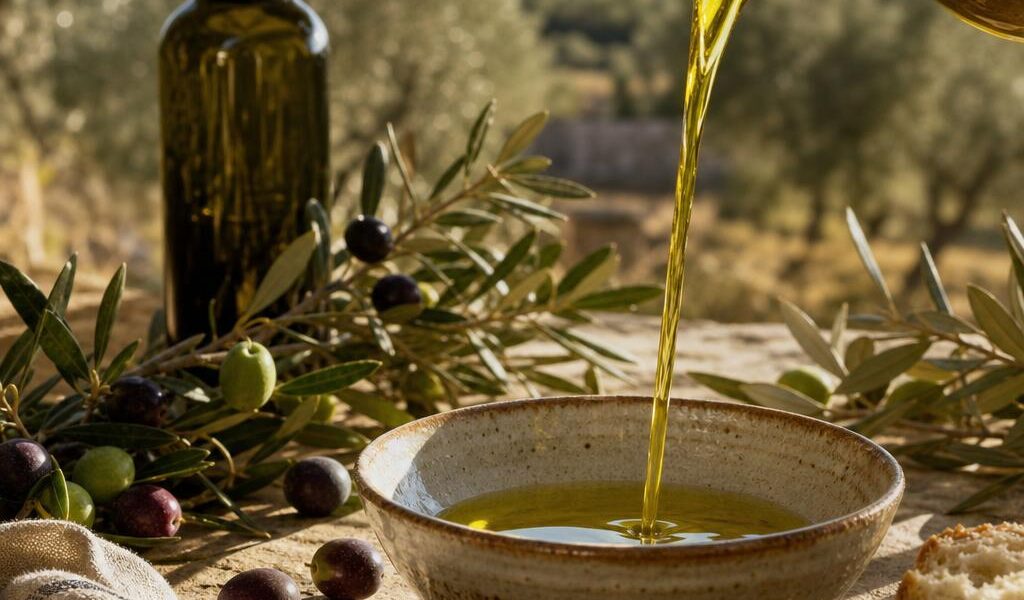
In the rolling hills of Tuscany, where olive groves and vineyards quilt the landscape, an age-old ritual unfolds. It’s harvest time. The ancient trees, laden with fruit, are a hive of activity. Workers, hands moving swiftly, pluck olives from the branches in a rhythmic dance. These small, green orbs are destined to become the liquid gold we know as olive oil. This guide will take you from these sun-dappled groves to your kitchen, revealing the secrets of olive oil production, varieties, and uses along the way.
The Diverse World of Olive Oil
Olive oil is far from a one-size-fits-all product; it comes in several types, each with distinct characteristics and culinary applications. At the top of the quality scale is extra virgin olive oil, the least processed and most celebrated variety. It is obtained through cold pressing, a method that preserves the olives’ natural flavors and nutrients, resulting in an oil rich in antioxidants and polyphenols, known for their health benefits.
Virgin olive oil shares the cold-pressed method but has a slightly higher acidity and a milder taste. Pure olive oil combines refined and virgin oils, offering a more neutral flavor suited for cooking. For a unique twist, try flavored olive oils infused with garlic, lemon, or herbs. Light olive oil, a refined variety lighter in taste and color, is perfect for baking and high-heat cooking.
From Grove to Bottle: The Olive Oil Process
The transformation from olive to oil is a meticulous process. Harvest timing is key; olives are typically picked in the autumn, with timing affecting flavor. Early harvests yield more bitter oils, while later ones are milder.
Post-harvest, olives head to the mill for cleaning, separating them from leaves and stems. They are then ground into a paste. This paste is mixed slowly to encourage the oil droplets to gather, a process called malaxing.
Extraction follows. The paste is either pressed or spun in a centrifuge to separate oil from water and solids. Traditional methods use stone mills; modern techniques prefer stainless steel centrifuges. The oil is then filtered and stored in stainless steel tanks to preserve its quality.
Olive Oil: A Nutritional Powerhouse
Olive oil is more than a culinary staple; it’s a nutritional powerhouse. Harvard Health praises its heart benefits, attributing them to monounsaturated fats that lower bad cholesterol. Rich in antioxidants, it combats oxidative stress and inflammation, contributing to chronic disease prevention.
Research links olive oil to reduced stroke and type 2 diabetes risk. The Mayo Clinic links it to improved brain health and a lower Alzheimer’s risk. Beyond health, it’s prized in skincare for its moisturizing and nourishing properties.
Culinary Magic: Cooking with Olive Oil
Olive oil’s versatility is unmatched in the kitchen. Extra virgin olive oil, with its robust flavor, is perfect for drizzling over salads, grilled vegetables, and even ice cream, enhancing the simplest dishes. It’s a staple of Mediterranean cuisine.
Understanding olive oil’s smoke point is crucial. Extra virgin has a lower smoke point, around 375°F, making it suitable for sautéing and baking but not high-heat frying. For frying, opt for refined or light olive oils, which handle higher temperatures.
In baking, olive oil adds moisture and a subtle flavor to cakes and breads. Its applications extend to desserts, where it can add depth. Flavored olive oils offer further culinary exploration, enhancing both sweet and savory recipes.
Olive Oil Tasting: A Sensory Experience
Like wine, olive oil tasting is an art involving all the senses. Notice the color, ranging from golden yellow to vibrant green. The aroma should be fresh, echoing the olives with hints of grass, artichokes, or tomatoes.
Sip a small amount, letting it coat your palate. A quality olive oil balances fruitiness, bitterness, and pungency. Bitterness indicates healthy polyphenols, a mark of quality.
A good olive oil leaves a pleasant finish. A greasy or musty taste suggests rancidity or poor quality. Olive oil tastings and workshops are excellent for refining your palate and understanding regional differences and production methods.
Preserving Quality: Storing Olive Oil
Proper storage maintains olive oil’s quality and flavor. Light, heat, and air degrade it, so store olive oil in a cool, dark place, away from stoves or windows.
Use dark glass bottles or stainless steel containers to protect from light. If buying in bulk, decant into smaller bottles to limit air exposure. While olive oil doesn’t spoil like other foods, for optimal flavor, use it within 18 to 24 months of pressing.
Olive Oil vs. Vegetable Oil: A Comparison
Olive oil and vegetable oil differ in flavor, nutrition, and use. Olive oil, especially extra virgin, offers rich flavor and health benefits due to its monounsaturated fats and antioxidants.
Vegetable oil, often a blend, has a neutral taste suitable for frying and baking due to its higher smoke point, but it lacks olive oil’s beneficial nutrients.
When choosing, consider desired flavor and health benefits. Olive oil enhances taste and nutrition; vegetable oil offers versatility for high-heat cooking.
| Aspect | Olive Oil | Vegetable Oil |
|---|---|---|
| Flavor | Rich, fruity | Neutral |
| Smoke Point | 375°F (extra virgin) | 400-450°F |
| Health Benefits | High in antioxidants and monounsaturated fats | Lower in beneficial nutrients |
| Uses | Salads, sautéing, baking | Frying, baking, general cooking |
Navigating Olive Oil Brands: Making the Right Choice
With countless brands available, selecting olive oil can be overwhelming. Look for “extra virgin” labels for quality assurance. Authenticity matters, so choose brands with transparent production details, including harvest date, region, and certifications from respected organizations like the International Olive Council.
Consider the oil’s origin, as regions impart distinct flavors. Italian oils often have grassy notes, Spanish oils might be robust and nutty, while Greek oils are typically fruity and peppery. Organic options, free from synthetic fertilizers or pesticides, offer a purer choice.
Price may indicate quality, but not all expensive oils are superior. Extremely cheap options might be blends or lower quality. Taste and compare different brands to find one that suits your flavor preferences and culinary needs.
What are the different types of olive oil?
The main types of olive oil include extra virgin, virgin, pure, light, and flavored oils. Each has unique characteristics and uses, with extra virgin being the highest quality.
What are the health benefits of olive oil?
Olive oil is rich in monounsaturated fats and antioxidants, aiding in cholesterol reduction, heart disease risk reduction, and providing anti-inflammatory benefits. It supports brain health and may lower the risk of certain chronic diseases.
How should I store olive oil?
Store olive oil in a cool, dark place, preferably in a dark glass or stainless steel container to protect from light. Keep it away from heat sources and use within 18 to 24 months of pressing for best flavor.
Can olive oil be used for frying?
Extra virgin olive oil, with its lower smoke point, is best for light sautéing and baking. For frying, choose refined or light olive oils, which can handle higher temperatures.
Is there a difference between organic and non-organic olive oil?
Organic olive oil is made from olives grown without synthetic fertilizers or pesticides. It may appeal to those seeking a more natural product, although both organic and non-organic oils can be high-quality if processed correctly.
Olive oil is more than a pantry staple; it’s a versatile ingredient with a rich history and numerous health benefits. From selecting the right variety to mastering its culinary applications, olive oil has earned its place in kitchens worldwide. Whether drizzled over a simple salad or used in a complex dish, olive oil brings depth and richness to any meal, making it an essential component from harvest to table.